Game Box

JINHAO XINGYUAN
Packaging Industry Analyst
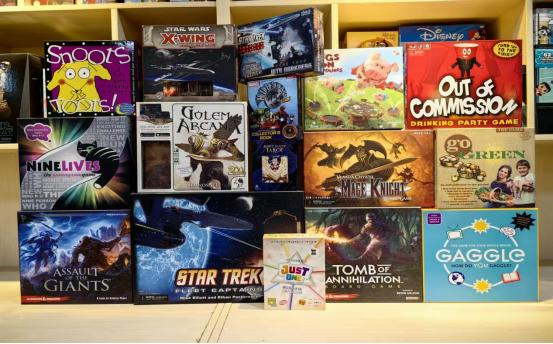
How much does the game box take up in your game project budget? 10%? 20%? 30%? This is not a question that means nothing; This is a question that means a lot! Imagine your game being put up on a shelf of a store, how can it catch customers’ eyes without saying anything? Of course, you may say a lot of players or fans know about your game through Kickstarter, or Gamefound, or Boardgamegeek; they know the content of the game, they would go directly to the game, or get delivered with the game without need to go out to the store. Yes, indeed. But how about those who don’t know your game and are looking for one that is attracting and entertaining? What makes your game stand right out in front of these customers? You already got the answer, I believe. And you already win one-third of the campaign when you realize it and HALF when a stunning game box is cast out in public!
Well, to have a decent and attracting Game Box, your design is always crucial, but not only that, the Structure and the Printing Craftsmanship that carry your design take the same position.
Different and Commonly Used Structures:
1) Tuck Box
It’s a simple one, compact in structure and cheap in cost. But usually it is thin, not that sturdy. It is suitable for Card Games, not for Board Games with many components. I’ve seen some RPG board game with a big tuck box, which really “impressed” me (not in a good way, you know, but the opposite) as the overall quality level of the entire game is dragged down and you seem to hear the components in it outcrying “Save me, I’m not safe here!”.
2) Lid and Bottom Box
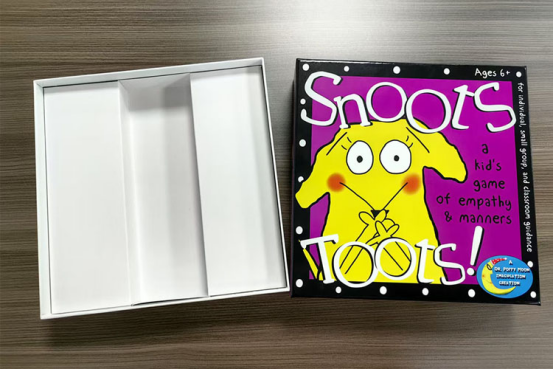
Also called Lid and Base Box or Telescope Box. It is a Two-Piece Box which is most commonly used for Board Games and some Card Games. It usually comes with a Plastic Tray/Insert or Paper Tray/Insert, which altogether hold up the components well while in transit. Most of them are Paper Box, few of them wooden or metal. And most of them are rectangular or square, few of them in cylinder or other custom shapes.
3) Box with a Window
This is usually used for Toys or Dolls, seldom for games, but those whose boxes have a transparent PVC window right over the minis or other components cast a unique view, quite loud to players.
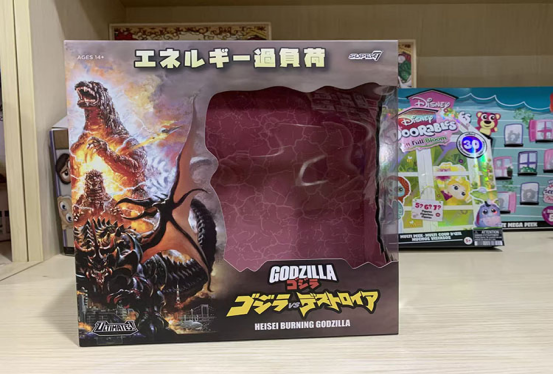
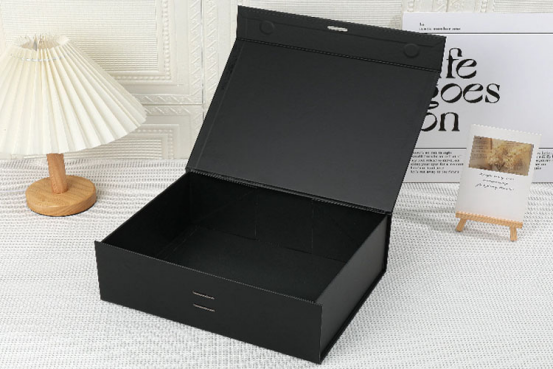
4) Magnetic Box
It is a flip-top box with magnets in the box body which is usually used for gift box or deluxe edition of a game as it is higher in cost. We do have a few clients who launched their deluxe-edition games with Magnetic Boxes as Gamefound Stretch Goals or exclusives for their Kickstarter backers which brought them a magnificent effect.
Printing & Production Craftsmanship
You got your box structure, you got your design, then it is what combines and incorporates them and what makes your game more attractive.
Apart from some prevalent printing technologies like offset printing, digital printing, flexo printing, screen printing, etc., we also utilize some other craftsmanship to enhance your design and box in a more visually attractive and durable way:
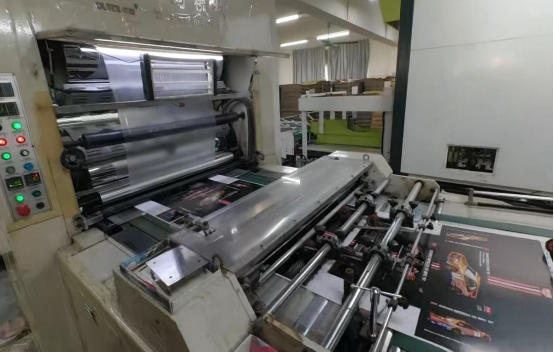
1) Lamination
It strengthens the box by laminating a piece of film on the printed paper, making it more durable, not be broken easily, whether it is Matte Lamination or Glossy Lamination, and Glossy makes the printing more vibrant which is more suitable for kids’ games that are rich in colors.
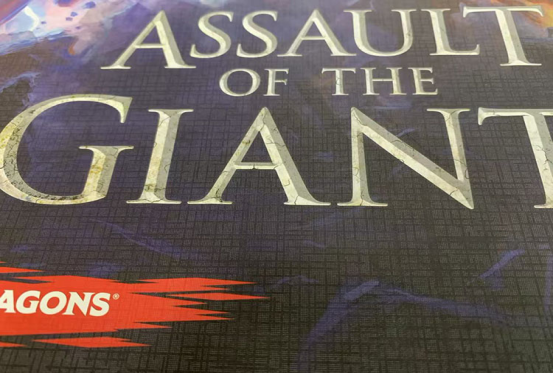
2) Linen Finish
This is a very vivid term. Yes, the effect is just like linen fabric. It is visually aesthetic and tactile while being applied on the printed design. Also, it, to a certain extent, makes the packaging box more rigid, enhancing the wear resistance and scratch resistance, which hence prolongs the service life.
3) Spot UV, Hot Stamping, Embossing & Debossing
They are different craftsmanship but have a similar effect or function - they all bring a unique texture to the printing that can make the specific area of the printed design look more stereoscopic, vigorous and prominent. Therefore, they are usually used to highlight logos, trademarks, or specific graphics, so as to strike a tremendous visual impact on players and customers. Hence they are usually used for high-end printing or deluxe editions of the games.
Spot UV is bright and glossy. When you touch it, it feels like you touch on a piece of amber.
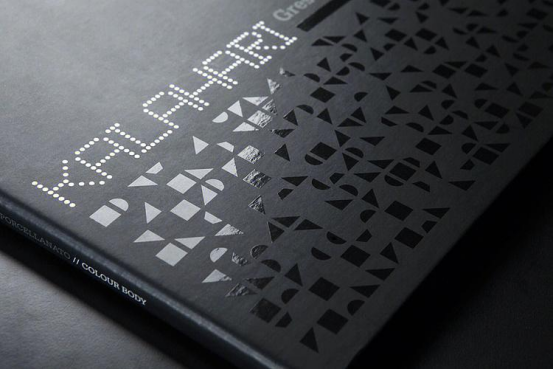
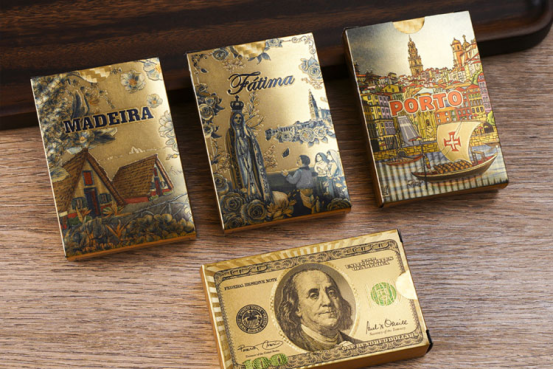
Hot Stamping usually includes Gold Stamping and Silver Stamping. There are other colors of course, but gold and silver are seen more commonly. Gold Stamping and Silver Stamping are also called by some people Gold Foil and Silver Foil. They are not always stereoscopic. In many cases, they are simply flat printing, but stereoscopic if in relief hot stamping.
Because of the precious metal attribute of Gold and Silver, Gold Stamping and Silver Stamping are born to endow the printed artwork with a unique metallic texture, making it look exquisite and luxurious.
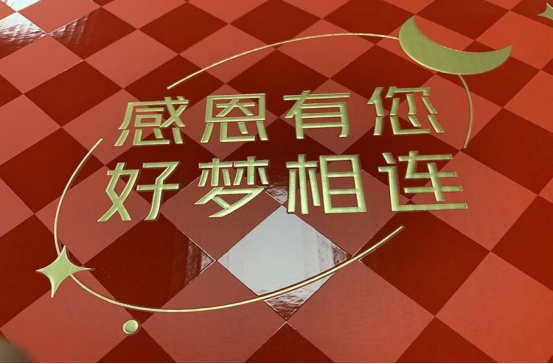
Embossing & Debossing have completely opposite printing effects. Embossing means the printed area goes upwards, whereas for Debossing the printed area goes downwards. They are both very stereoscopic, distinctly vibrant and eye-catching.
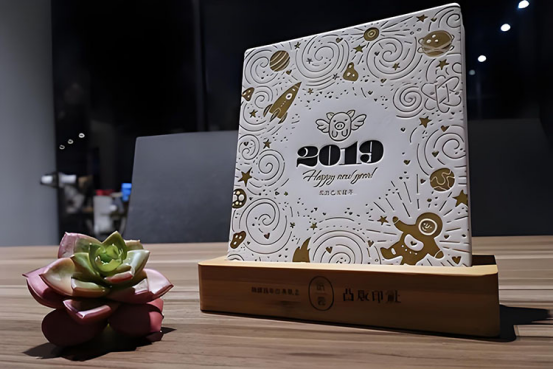
The printing technologies and craftsmanship stated above are not only applicable to game box or packaging box printing, but also to other components. They meet your needs of personalized customization on the game box making or any other printed artworks.
Above all, your game box is not just a packaging stuff but a key member of your game that casts the first even decisive impression on players. It is the key to open your game door, and not to exaggerate, the key for you to win the campaign.