Game Cards

JINHAO XINGYUAN
Packaging Industry Analyst

Playing Cards (or Poker Cards) are an important member of a game, either it is a Trade Card Game (TCG) or a Board Game. The quality of them directly affects players’ experience. Well, how to output high-quality cards? The precondition is to select the right and high quality materials. This is the key theory applied for any other components in the game.
There are 2 factors that help you define and select the right and high quality materials.
1) GSM
GSM is the abbreviation of “grams per square meter” which stands for the weight and the thickness of the paper materials. That means different GSM values bring different weights and thicknesses, which bring different quality and durability. Generally speaking, higher GSM value usually stands for better quality and durability.
Here are some examples for your reference:
70~140gsm, paper weighted in this range can be used to make booklets (rule books), score pads, instruction sheets, etc., such as 80gsm woodfree paper or 128gsm C2S.
150~200gsm, paper weighted in this range can be used for the upper layer of a game box, the upper/bottom layer of a game board, reference cards, some type of tokens, etc., such as 157gsm C2S or 200gsm CCNB.
200~400gsm, paper weighted in this range can be used for the upper/bottom layer of punch boards, tokens, high quality playing cards, player mats, paper tray, etc., such as 250gsm CCNB, 310gsm card stock or 350gsm C2S.
To select an appropriate GSM paper material will not only ensure the quality and the durability of the game components, but also enhance players’ gaming experience. That is crucial to the success of the game project.
2) Select Among Different Materials
There are a few materials commonly used to make cards:
Art Paper: The art paper used to make cards is usually thick and stiff, lack of ductility and folding resistance. It is good for making samples/prototypes, but not for being used frequently or shuffling.
Plastic: It has a top durability, usually serves special requirements in card making, less commonly used.
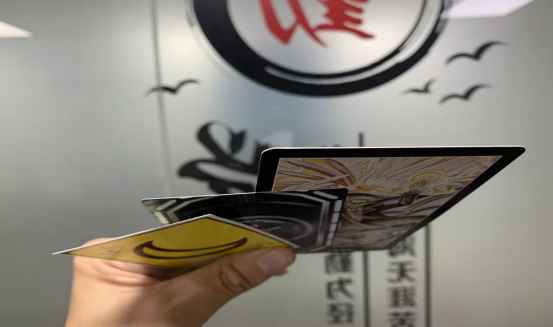
Card Stock: The card stock used to make cards is made of 2 layers of paper with a core contained internally. It is the most commonly used material in card making, because it is durable and ductile, presenting a remarkable performance for frequent using and shuffling.
There are usually 4 different colors of cores for the card stock, Grey, Blue, White and Black which lead to different performances in quality. It is not professional to simply judge which is bad and which is good. It depends on their characteristics and your requirements as they all have their own advantages and disadvantages.
Grey Core Card Stock meets the basic needs of card making. It is cost-effective.
Blue Core Card Stock is a good choice if you have requirements for personal style or anti-counterfeiting for your cards.
White Core Card Stock delivers an excellent printing performance. It is the best choice if you have a very high demand on printing performance.
Black Core Card Stock is excellent, too. But it is higher in cost because it is made of special raw materials and craftsmanship. It is the best choice if you have a demand for anti-peeping function.

So overall, you’ve got a general idea about the card materials? Selecting a proper material plus some craftsmanship like matte varnish, glossy varnish, linen finish, etc., you make a big step toward the success of your game project!
If you still have something vague in mind or need card templates for your design, please do not hesitate to contact our professionals!