
Frying Process: The “Invisible Armor” and “Visual Magic” of Color Box Packaging

JINHAO XINGYUAN
Packaging Industry Analyst
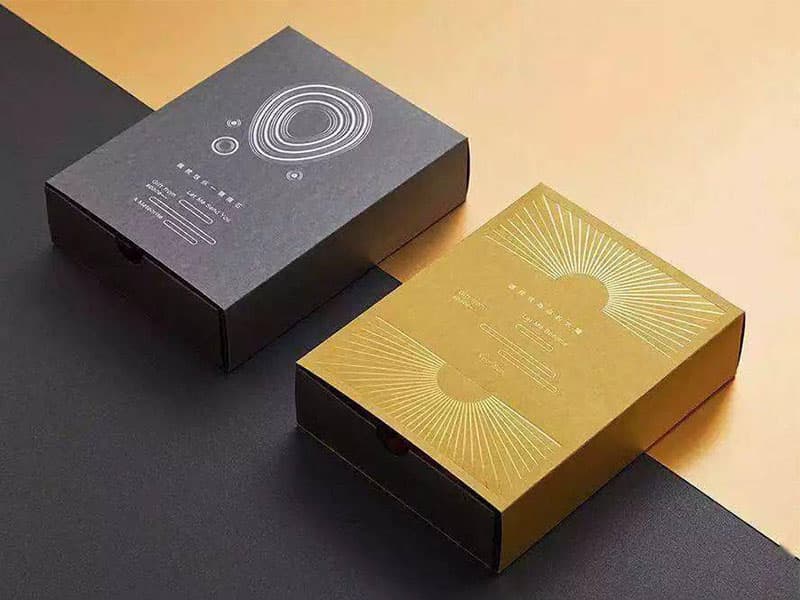
Empowering Color Box Protection Upgrade and Aesthetic Leap with Technology
In the high-end consumer market, color boxes are not only product containers but also silent declarations of brand texture. As a core technology for color box surface treatment, the varnishing process (glazing process) applies a colorless and transparent coating to endow color boxes with three key values: scratch and wear resistance, moisture and stain resistance, and visual enhancement. It has become an indispensable "invisible armor" for high-end color boxes.
🛡️ I. Core Functions of Varnishing Process: Beyond Basic Protection
1. High-Strength Physical Protection
Wear and Scratch Resistance: Forms a dense coating on the color box surface, increasing wear resistance by 300%, effectively resisting scratches during transportation and on shelves.
Moisture and Stain Resistance: Seals paper fiber pores to block moisture penetration (no deformation in 80% humidity environment), and oil stains can be easily wiped off.
2. Visual Texture Enhancement
Gloss Control: Glossy Varnish: Reflectivity > 90%, presenting a mirror-like high-gloss effect and enhancing color saturation (e.g., the dazzling texture of beauty gift boxes);
Matte Varnish: Soft luster with diffuse reflection and delicate touch, suitable for the understated luxury style of luxury goods.
Color Durability: Isolates ultraviolet rays and oxygen to slow down ink fading, with a color difference ΔE < 1.5 within 3 years.
3. Environmental and Safety Compatibility
Water-based varnish contains no VOCs and has passed FDA food contact certification, which can be directly used for food and pharmaceutical color boxes;
The coating is non-toxic and odorless after curing, and can be naturally degraded after disposal (soil decomposition cycle < 180 days).
🎨 II. Process Types and Scenario Adaptation: Precise Demand Matching
Process Type | Characteristics | Typical Application Scenarios |
|---|---|---|
Glossy Varnish | High reflectivity, strong wear resistance, low cost | Electronic product color boxes, promotional gift boxes (eye-catching visual effect) |
Matte Varnish | Delicate touch, fingerprint resistance, prominent high-end feel | Luxury packaging, high-end book covers |
Reverse Varnish | Local matte + high-gloss contrast, strong three-dimensional sense | Wine boxes, premium gift boxes (artistic texture) |
UV Varnish | Instant curing, chemical corrosion resistance | Cosmetic bottle boxes, medical device packaging |
Case Study: A Certain Imported Chocolate Color Box
Box body treated with matte varnish, with a silk-like touch;
Local logo covered with glossy varnish, shining dynamically under light;
Transportation turnover loss rate reduced from 12% to 3%, and customer complaints decreased by 40%.
⚖️ III. Varnishing vs. Laminating: Rational Process Selection
Indicator | Varnishing | Laminating |
|---|---|---|
Cost | Unit price 30–50% lower, no plastic film consumables | High cost of film + adhesive |
Environmental Friendliness | Water-based coating degradable, carbon footprint reduced by 60% | PET film hard to degrade, recovery rate < 20% |
Protection | Excellent scratch resistance, moderate water resistance | Complete water resistance, stronger tear resistance |
Texture | Natural paper touch, good air permeability | Obvious plastic feel, stiff touch |
Applicable Scenarios | High-end color boxes, food packaging, book covers | Outdoor product packaging, marine moisture-proof needs |
Decision Recommendations:
Pursuing natural texture + cost control → Varnishing is preferred;
Rigid demand for water and stain resistance in extreme environments → Laminating is selected.
You May Also Like
Spot UV Printing Specialty
Spot UV printing (local UV coating) applies glossy UV varnish to selected areas, cured by UV light for 3D texture. Learn types, process, screen vs flexo, and packaging uses....
Read more
Custom Color Box Manufacturer | Printed Color Boxes, Low MOQ, Factory Direct
We are a custom color box manufacturer making printed folding cartons, mailer boxes, rigid color boxes and retail packaging. CMYK/Pantone printing, kraft & cardboard, samples before bulk, 7–20 days production....
Read more
Colored Packaging Box Manufacturing | Custom Printed Color Box Manufacturer
We specialize in colored packaging box manufacturing with advanced CMYK & Pantone printing, offering eco-friendly kraft, corrugated, and rigid color boxes. Custom sizes, low MOQ, and worldwide shipping for retail, e-commerce, and gift brands....
Read more