
An Introduction on Board Games

JINHAO XINGYUAN
Packaging Industry Analyst
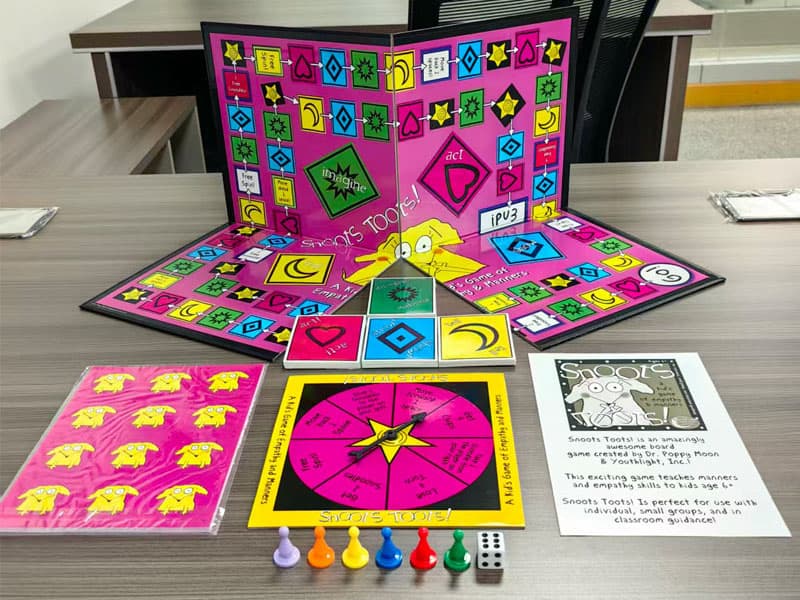
An Introduction on Board Games
Board games, as a form of tabletop entertainment that requires face-to-face interaction among players, have accompanied human civilization for thousands of years. Different from electronic games that rely on digital devices, board games emphasize real-time communication and collaborative or competitive interaction between people, forming a unique entertainment and social ecosystem.
1. Development History of Board Games
The origin of board games can be traced back to ancient civilizations. As early as 3500 BC, the ancient Egyptians created "Senet", a board game with religious and entertainment significance, which is one of the earliest recorded board games in human history. In ancient China, "Go" and "Xiangqi (Chinese Chess)" emerged successively, integrating strategic thinking and cultural connotations, and have been passed down to this day. In the Middle Ages, simple board games such as "Chess" and "Checkers" became popular among European nobles and civilians, gradually forming standardized rules.
The modern board game era began in the 20th century. In 1935, the launch of "Monopoly" marked the rise of commercial board games, which quickly spread around the world and became a classic. Since the 1990s, with the improvement of people's demand for diversified entertainment, board games have entered a period of rapid development. European countries represented by Germany have launched a large number of high-quality strategy board games, promoting the professionalization and diversification of the industry. In recent decades, board games have gradually spread from Europe and America to Asia and other regions, forming a global market.
2. Classification of Board Games
Board games can be divided into multiple categories according to different standards such as gameplay, number of players and core mechanics. The main classifications are as follows:
Strategy Board Games: This type of game focuses on testing players' strategic planning and resource allocation capabilities. Players need to make long-term plans and adjust strategies according to the situation. Representative works include "Catan", where players develop territories and compete for resources, and "Modern Art", which involves auctioning paintings to gain profits.
Social Party Games: Designed for group entertainment, these games have simple rules and strong interactivity, suitable for gatherings. They emphasize communication and interaction between players rather than complex strategies. Typical examples are "UNO", a card game that tests reaction speed, and "Werewolf", a reasoning game that relies on role judgment and speech.
Role-Playing Board Games: Players assume specific roles in the game and advance the plot through cooperation or confrontation. Such games have strong storytelling and immersion. "Dungeons & Dragons" is a classic representative, where players explore fantasy worlds as different characters.
Abstract Strategy Games: These games abandon specific themes and focus on pure logical reasoning and spatial thinking, with simple components but profound strategies. "Go" and "Chess" are classic abstract strategy games with a long history.
Thematic Board Games: Combined with specific historical, cultural or fantasy themes, these games integrate storylines with gameplay. "Three Kingdoms Kill", which is based on the Three Kingdoms period, and "BANG!", a western-style gunfight game, belong to this category.
3. Entertainment Characteristics of Board Games
Board games have unique entertainment attributes that distinguish them from other forms of entertainment:
Face-to-Face Social Interaction: As an "unplugged" entertainment method, board games get people away from electronic screens and promote direct communication. Players can express ideas, negotiate, cooperate or compete through language and body language, which is conducive to enhancing interpersonal relationships.
Strong Inclusiveness: Board games cover a wide range of age groups and groups. From simple games suitable for children to complex strategy games for adults, there are corresponding products. Whether it is family gatherings, friend parties or business leisure occasions, board games can be used as a communication medium.
Combination of Fun and Challenge: While bringing entertainment, many board games also test players' thinking ability, reaction speed and psychological quality. For example, strategy games require overall planning, and reasoning games need careful observation and logical analysis, realizing the combination of entertainment and intellectual development.
Flexible Gameplay: Most board games have clear but not rigid rules. Players can even adjust some details according to actual situations to improve the game experience, showing strong flexibility and adaptability.
4. Famous Board Games
UNO: Invented by Merle Robbins in 1971 and now produced by Mattel, UNO is a globally popular card game. The game is played with 2-10 players, and the rule is to play cards of the same color or number as the previous one. It is simple to learn but requires quick reaction, making it suitable for all age groups.
Catan: A landmark work in strategy board games, suitable for 3-4 players. Players play as explorers to develop the island of Catan, build houses, cities and roads, and obtain resources through dice rolling. The first player to reach 10 victory points wins. It has won many awards and is loved by both new and old players.
Werewolf: A classic social reasoning game suitable for 8-18 players. Players are assigned roles such as werewolf, villager, prophet and witch. The game alternates between day and night: werewolves kill villagers at night, and villagers discuss and vote to eliminate suspected werewolves during the day. It requires logical reasoning and speech skills, and is a popular game in board game bars.
Three Kingdoms Kill: A theme board game based on the Three Kingdoms period in China. It integrates history, literature and art, with 2-10 players. Players play as Three Kingdoms generals and assume identities such as lord, loyal minister, traitor and spy. They win by completing identity-based tasks. It has rich cultural connotations and is suitable for all ages.
Modern Art: Designed by Reiner Knizia, it is a representative of auction board games. Suitable for 3-5 players, each player acts as both a buyer and a seller. They auction paintings to make profits, testing the ability to use cash flow. The game is divided into four stages, and the player with the most cash at the end wins.
5. Development Status of Board Games
At present, the global board game industry shows a steady growth trend. Europe and America are mature markets with a long history of board game culture. Germany, in particular, has a well-developed board game design and production industry, and many classic works are born here. In Asia, countries such as China, Japan and South Korea have seen rapid development of the board game market in recent years.
In China, board games have become a popular entertainment method for family gatherings, friend parties and business activities. Board game bars and themed clubs are constantly emerging, forming a unique offline social scene. At the same time, with the development of the Internet, online board game platforms have also emerged, realizing the combination of online and offline. The local board game design industry is also growing, and works with Chinese cultural themes such as "Three Kingdoms Kill" have gained wide recognition.
In addition, the board game industry is also showing a trend of specialization and segmentation. There are not only board games for entertainment, but also educational board games for children's intellectual development and professional competitive board games. Some international board game competitions have also been held, promoting the professionalization of the industry.
6. Categorization of Board Games
In addition to the classification based on gameplay, board games can also be categorized from other dimensions to better meet different needs:
By Number of Players: It can be divided into two-player games (such as Go, Chess), multi-player small-scale games (3-5 players, such as Catan) and large-scale group games (8 or more players, such as Werewolf).
By Game Duration: There are short-term games (15-30 minutes, such as UNO) and long-term games (1-3 hours or more, such as Dungeons & Dragons).
By Application Scenario: It includes family entertainment games (simple and easy to operate, suitable for all ages), party interaction games (strong interactivity, lively atmosphere) and competitive professional games (complex rules, high strategic requirements).
By Target Group: There are children's educational games (focusing on intellectual development and hands-on ability), youth fashion games (pursuing novelty and social attributes) and adult strategy games (emphasizing logical thinking and decision-making ability).
7. Benefits of Board Games
Playing board games not only brings entertainment but also has multiple benefits for individuals and groups:
Promoting Social Communication: Board games provide a natural communication scenario, helping people break the ice, enhance mutual understanding and improve interpersonal skills. It is an effective way to maintain family relationships and make friends.
Developing Intellectual Abilities: Strategy board games can exercise logical reasoning, strategic planning and resource allocation abilities; reasoning games can improve observation and analytical skills; educational board games for children can help develop cognitive abilities and hands-on skills.
Relieving Mental Stress: In the process of playing games, people can temporarily get rid of the pressure of work and life, relax their minds and adjust their emotions. The sense of accomplishment brought by winning the game can also enhance self-confidence.
Cultivating Good Qualities: Board games have clear rules, which can cultivate players' sense of rules and integrity; cooperative board games can enhance team awareness and cooperative spirit; facing failure in the game can also cultivate the ability to withstand setbacks.
Inheriting and Spreading Culture: Themed board games based on history and culture (such as "Three Kingdoms Kill") can make players understand cultural knowledge in entertainment and promote cultural inheritance and spread.
In conclusion, board games, as a traditional and innovative form of entertainment, have stood the test of time with their unique social attributes and multiple benefits. With the continuous development of the industry, board games will continue to enrich people's entertainment life and become an important part of social culture.
You May Also Like

Spot UV Printing Specialty
Spot UV printing (local UV coating) applies glossy UV varnish to selected areas, cured by UV light for 3D texture. Learn types, process, screen vs flexo, and packaging uses....
Read more
Custom Color Box Manufacturer | Printed Color Boxes, Low MOQ, Factory Direct
We are a custom color box manufacturer making printed folding cartons, mailer boxes, rigid color boxes and retail packaging. CMYK/Pantone printing, kraft & cardboard, samples before bulk, 7–20 days production....
Read more
Colored Packaging Box Manufacturing | Custom Printed Color Box Manufacturer
We specialize in colored packaging box manufacturing with advanced CMYK & Pantone printing, offering eco-friendly kraft, corrugated, and rigid color boxes. Custom sizes, low MOQ, and worldwide shipping for retail, e-commerce, and gift brands....
Read more