
What Are The Important Considerations in The Gold Stamping Printing Process?

JINHAO XINGYUAN
Packaging Industry Analyst
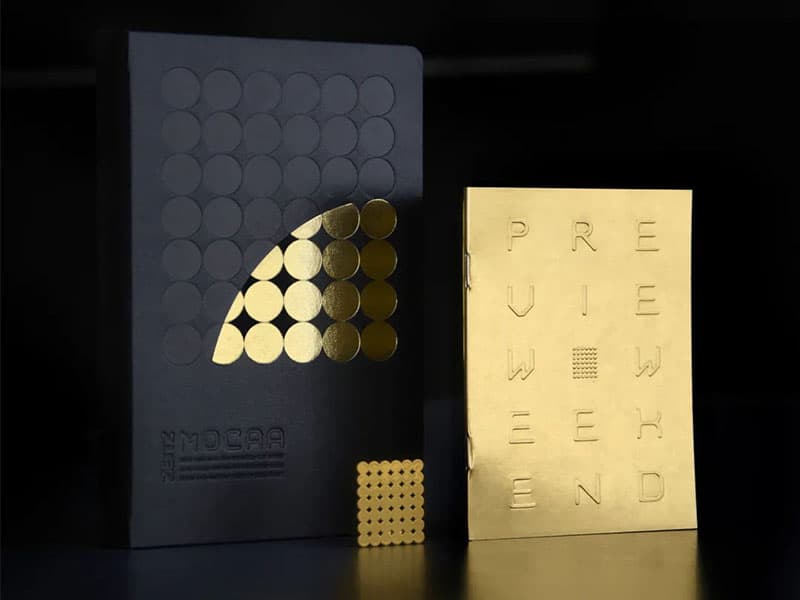
Key Points of Hot Stamping Printing in Practical Application
In printing fields such as packaging printing, catalog printing, and book printing, hot stamping printing is a commonly used process to enhance product texture. It is an indispensable element in almost all printed products that showcase a high-end quality. While hot stamping is excellent, the following key points must be noted in practical application to ensure stable and aesthetic effects:
1. Material Selection and Matching
Paper Characteristics
Prioritize papers with smooth surfaces and low ink absorption (such as coated paper and specialty paper). Avoid materials with rough surfaces or uneven coatings, as they may cause poor adhesion of the stamped gold or low glossiness.
It is necessary to test the heat resistance of the paper to prevent deformation or blistering during high-temperature stamping.
Hot Stamping Foil Adaptation
Select the type of hot stamping foil based on design effects: regular gold foil (conventional metallic colors), laser foil (iridescent effect), textured foil (leather/wood grain imitation), etc.
Specialized hot stamping foil must be selected for areas with special inks (such as UV printing layers) to avoid poor adhesion.
2. Process Parameter Control
Temperature and Pressure
Temperature: Generally controlled between 80℃ and 130℃, which needs to be adjusted according to paper thickness and hot stamping foil type. Too low temperature will result in poor stamping adhesion, while excessively high temperature may scorch the paper.
Pressure: Insufficient pressure leads to blurry patterns, while excessive pressure may puncture the paper. It is recommended to adjust gradually through sample testing.
Stamping Speed
High-speed stamping tends to cause incomplete transfer of the hot stamping foil, while low speed may affect the paper due to prolonged heat exposure. A balance between efficiency and quality must be achieved.
3. Design Optimization
Lines and Details
Avoid overly thin lines (recommended no thinner than 0.2mm) or dense screen dots, otherwise line breaks or adhesion issues may occur.
For text, it is advisable to choose bold fonts or widen strokes to ensure clear stamping.
Color Matching
Dark backgrounds (such as black and dark blue) can enhance the contrast of metallic luster, while light backgrounds require an increased hot stamping area to highlight the effect.
Stamping Position
Avoid areas that will be folded, cut, or laminated in post-processing to prevent wear or peeling of the gold layer.
4. Equipment and Environmental Requirements
Hot Stamping Plate Precision
When using engraved copper or zinc plates, ensure the plate surface is flat and the pattern edges are sharp to avoid burrs or blurred imprints.
Clean the hot stamping plate regularly to prevent residues from affecting the effect.
Environmental Control
Maintain the workshop humidity at 50%-60%. Excessively high humidity may cause paper deformation, while excessively low humidity may generate static electricity that adsorbs gold foil debris.
5. Common Issues and Solutions
Issue | Possible Causes | Solutions |
|---|---|---|
Gold Peeling | Insufficient temperature/pressure; poor paper coating | Increase temperature and pressure; replace with suitable paper |
Blurred Patterns or Rough Edges | Worn hot stamping plate; uneven pressure | Remake the plate; adjust equipment pressure balance |
White Spots or Blisters in Stamped Area | Moist paper; excessively high temperature | Pre-dry the paper; reduce stamping temperature |
6. Cost and Optimization
As the number of printing processes increases, the associated costs will also rise—for example, quotes for labor and material costs will increase, which requires attention. Generally, hot stamping is often combined with other processes; for instance, combining it with embossing can enhance the sense of layering of printed products.
You May Also Like
Spot UV Printing Specialty
Spot UV printing (local UV coating) applies glossy UV varnish to selected areas, cured by UV light for 3D texture. Learn types, process, screen vs flexo, and packaging uses....
Read more
Custom Color Box Manufacturer | Printed Color Boxes, Low MOQ, Factory Direct
We are a custom color box manufacturer making printed folding cartons, mailer boxes, rigid color boxes and retail packaging. CMYK/Pantone printing, kraft & cardboard, samples before bulk, 7–20 days production....
Read more
Colored Packaging Box Manufacturing | Custom Printed Color Box Manufacturer
We specialize in colored packaging box manufacturing with advanced CMYK & Pantone printing, offering eco-friendly kraft, corrugated, and rigid color boxes. Custom sizes, low MOQ, and worldwide shipping for retail, e-commerce, and gift brands....
Read more